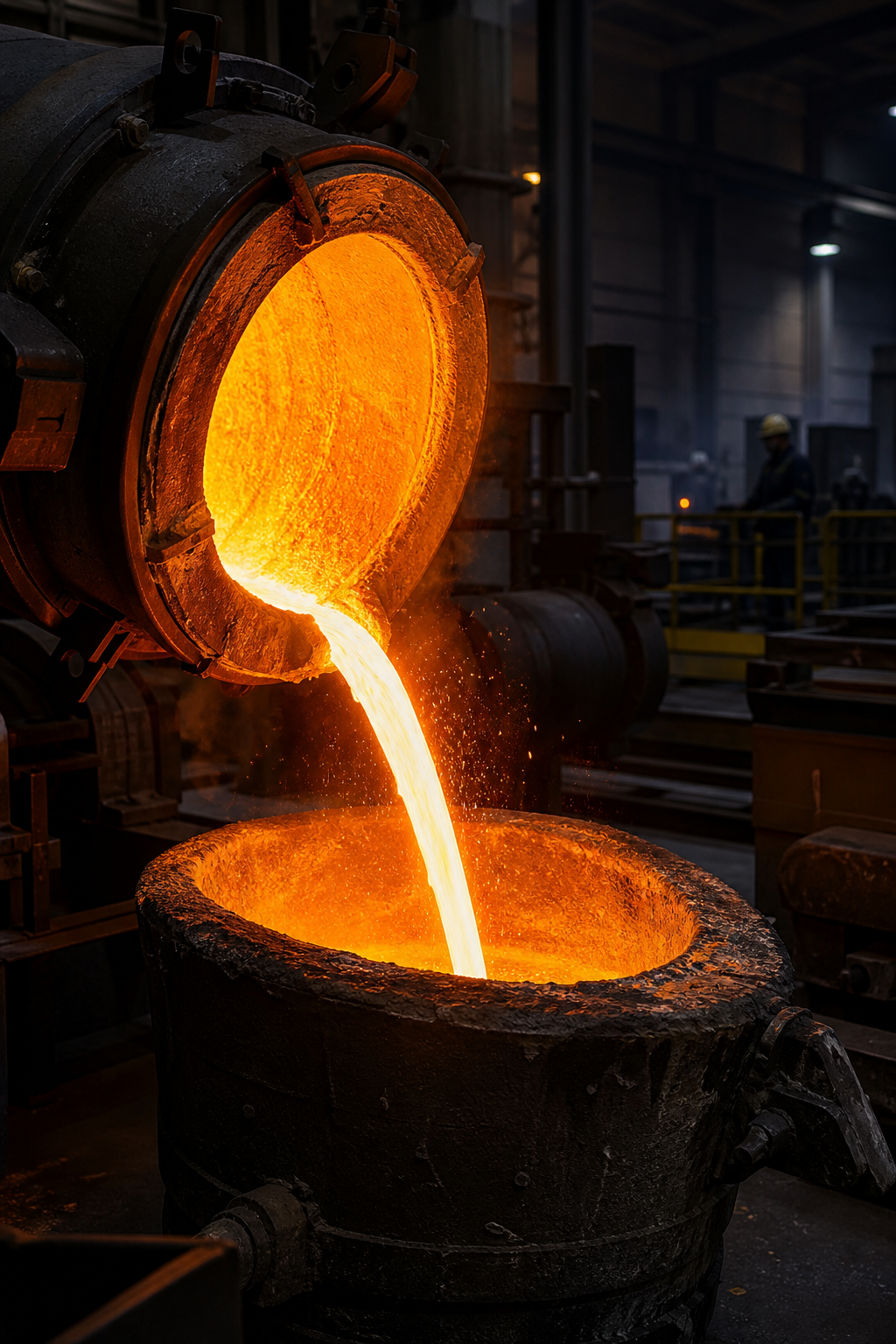
The Hundred Kilowatt-Hours
The electricity already sitting between average melting performance and a foundry’s demonstrated best.
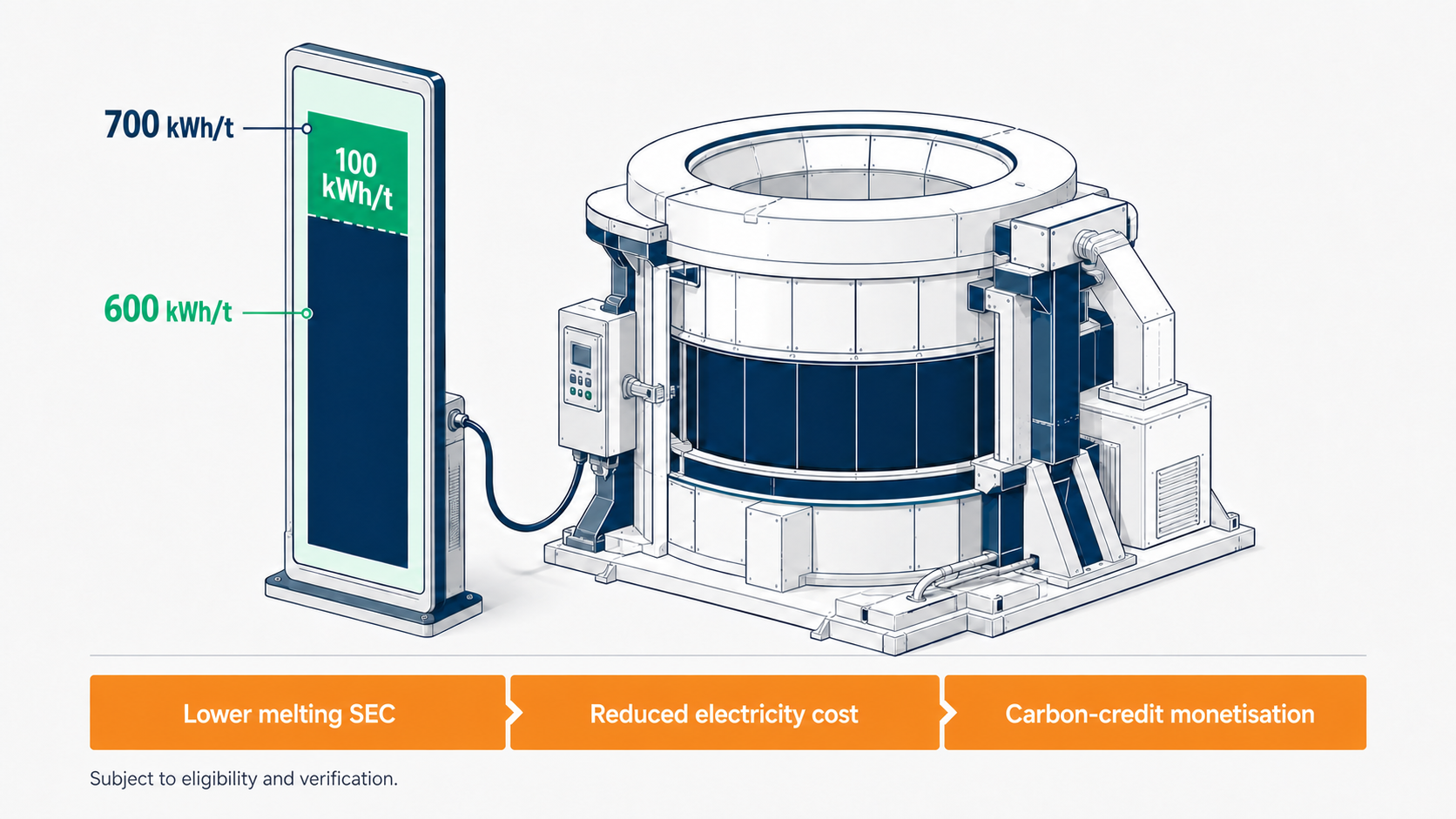
A hundred kilowatt-hours per tonne can materially change a foundry’s annual electricity cost and conversion economics. That opportunity is created in the everyday operating conditions that shape each melt. Specific Energy Consumption (SEC), measured in kilowatt-hours per tonne, makes the opportunity visible—and creates a practical starting point for improving it.
The Commercial Opportunity
At scale, a difference of 100 kilowatt-hours per tonne compounds quickly. Specific Energy Consumption improvement multiplied by tonnes melted shows the electricity avoided; electricity avoided multiplied by tariff shows the value retained. The next task is to turn this number into an operating improvement that lasts.
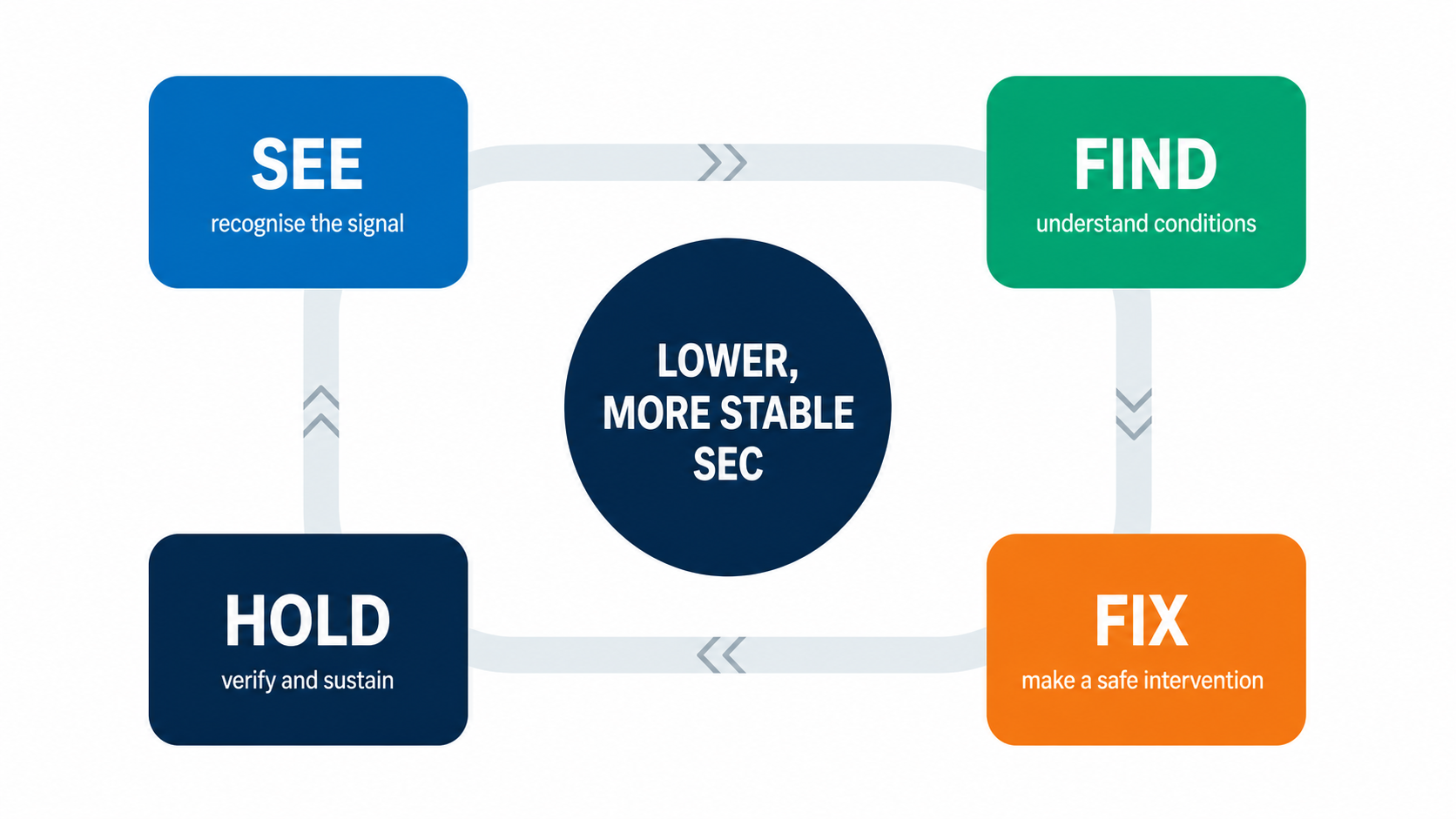
See. Find. Fix. Hold.
An SEC value records the outcome of a melt. Its commercial value appears when teams can understand why it changed, make a safe intervention, and verify the result. This creates a repeatable rhythm for stronger, more stable performance.
The Plant Has Already Shown What It Can Do
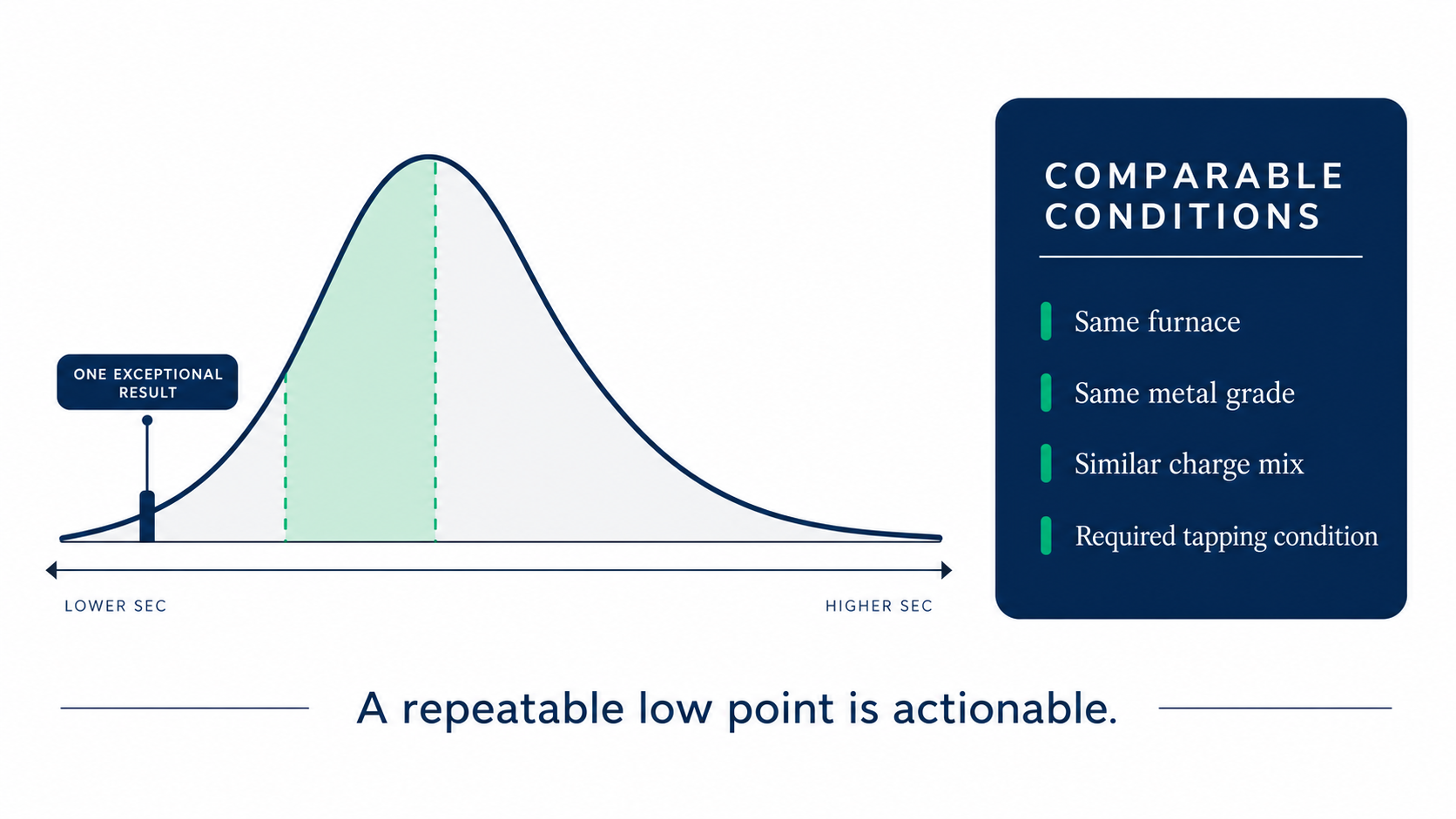
One exceptional low-SEC melt is a useful signal. A more valuable benchmark is a low result that recurs when the furnace, metal grade, charge mix and tapping condition are comparable. The Golden Operating Envelope turns the plant’s own experience into a credible target for the next operating cycle.
Read the Full Paper
Download The Hundred Kilowatt-Hours to explore the foundry SEC context, underlying methodology and the operating model for converting better energy performance into lasting value.